RV Battery Storage in Winter: AGM, Lead-Acid and Lithium Compared
Before an RV goes into winter storage, identify its battery chemistry. Flooded lead-acid, sealed AGM and lithium iron phosphate (LiFePO4) batteries have different storage and charging needs. What protects one type can shorten another’s life. The right plan comes from the label and the exact battery, charger and RV manuals—not from a universal winter battery rule.
This guide focuses on storage when an RV is parked for weeks or months. It does not provide instructions for wiring, charging a damaged battery or modifying an RV electrical system; ask an RV electrical technician to handle unfamiliar work. Any featured image is illustrative, not an identification of a particular RV battery.
Winter RV battery storage: the short answer
| Battery type | Storage priority | Important caution |
|---|---|---|
| Flooded lead-acid | Generally store fully charged; inspect as directed by the maker | A discharged battery is more vulnerable to freezing and sulfation |
| AGM (sealed lead-acid) | Generally store fully charged with periodic charge checks | Sealed does not mean it cannot discharge or freeze |
| LiFePO4 lithium | Use the manufacturer’s specified storage charge and disconnect/monitoring plan | Cold-weather charging limits depend on the exact model and protection system |
These are broad differences, not universal setpoints. Go RVing’s winter storage guide and Interstate Batteries’ FAQ discuss why periodic battery care matters.
First identify every battery in the RV
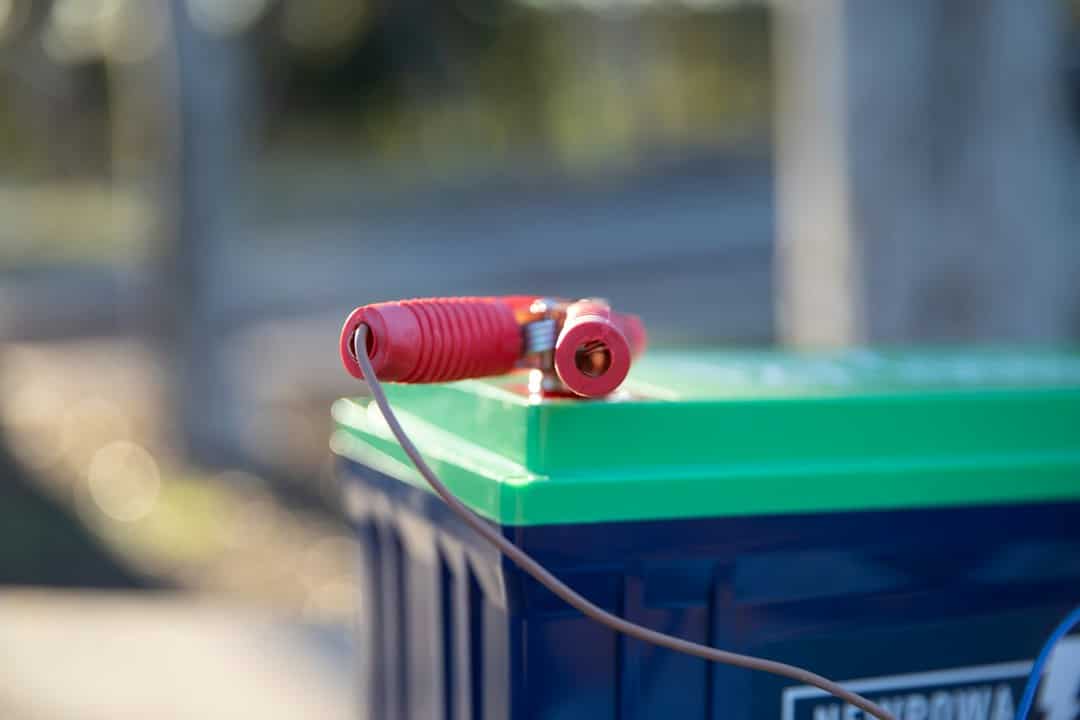
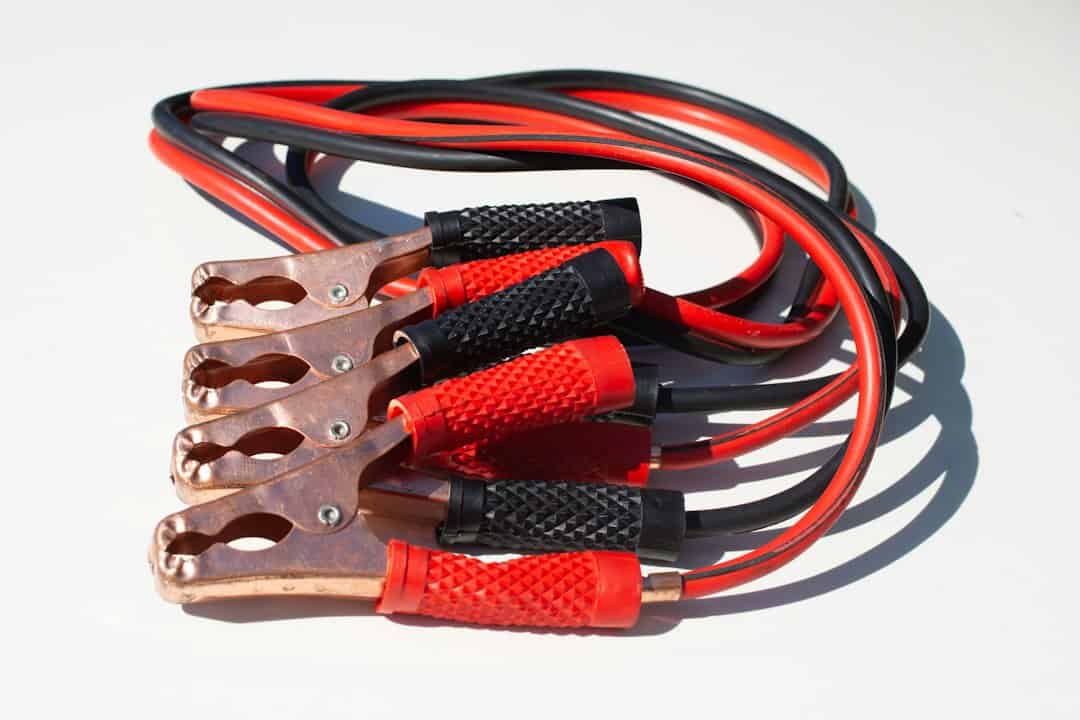
Illustrative photo: Newpowa / Unsplash. The equipment shown is not a model-specific RV battery installation.
A trailer may have a 12-volt house battery. A motorhome may also have a separate starter battery and a system that connects the battery banks under certain conditions. Solar panels, inverters, converters, monitoring equipment and alarm circuits may be connected even while the vehicle appears switched off.
Record the manufacturer and model of each battery, chemistry (flooded, AGM, gel or LiFePO4), installed location, charging equipment and any manufacturer-approved storage arrangement. If the system was upgraded by a previous owner, seek documentation rather than relying on the original RV brochure.
Lead-acid and AGM batteries: why maintaining charge matters
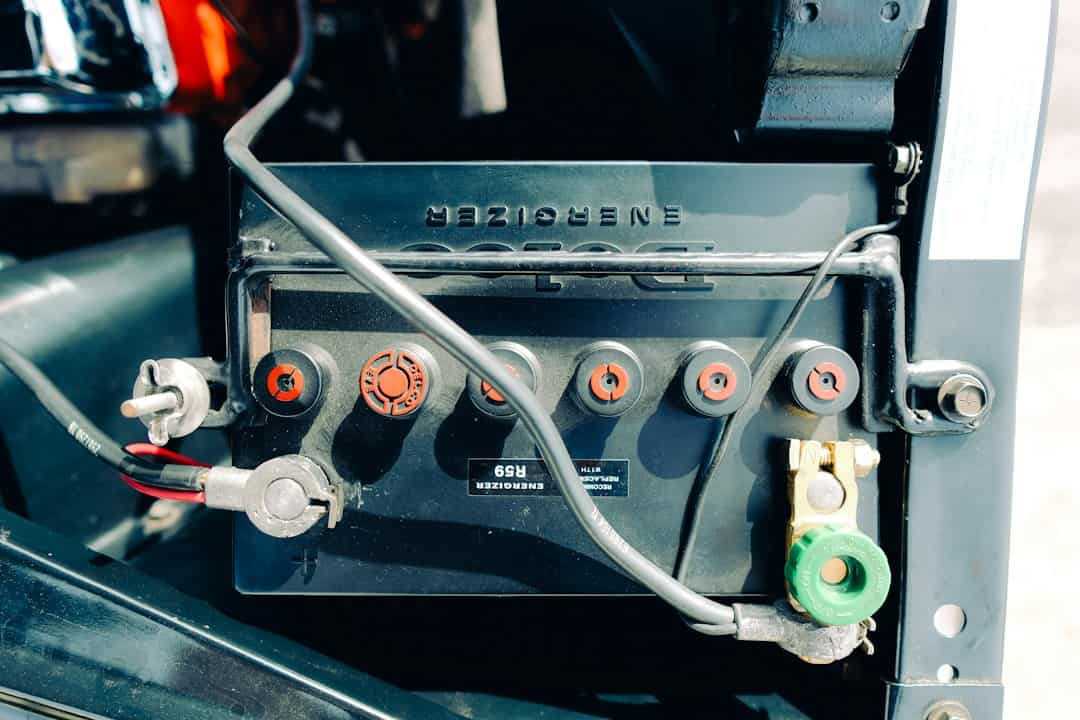
Illustrative photo: Daniel / Unsplash. The equipment shown is not a model-specific RV battery installation.
Lead-acid batteries gradually self-discharge, and prolonged storage at a low state of charge can contribute to sulfation. Cold-weather vulnerability also changes with state of charge: Interstate Batteries explains that a discharged battery may freeze at a much less severe temperature than a fully charged one. AGM is a type of lead-acid battery; it is sealed, but still needs a storage plan.
The manufacturer may recommend inspection, suitable charge maintenance or periodic charging with equipment approved for that battery. Flooded lead-acid batteries have additional maintenance requirements that sealed AGM batteries generally do not. Never open a sealed battery or improvise a charger setup; arrange qualified service when needed.
LiFePO4 batteries: storage charge and low-temperature charging
LiFePO4 batteries typically self-discharge slowly and can offer useful energy capacity at lower weight, but their charging limitations deserve special attention in Canadian winters. The Victron Lithium Smart battery manual, for example, permits charging only above its specified minimum of +5°C for that product. Other brands or battery designs may have different limits.
Some batteries include a battery management system (BMS) with low-temperature charge protection; some offer integrated heaters. Neither feature should be assumed from the word “lithium” alone. Confirm the exact product specification, whether its protections are actually installed and functioning, and how it interacts with the RV’s charger and solar controller.
A universal claim that all lithium batteries should be stored at exactly 50%, or kept connected to a maintainer all winter, is misleading. Follow the storage state-of-charge instructions and inspection interval for your model. Renogy’s RV lithium battery guide explains why charger compatibility matters when changing battery chemistry.
Hidden electrical loads during storage
An RV that looks “off” may still supply electricity to monitoring modules or other circuits. Over several months, even small standby loads can matter. The right isolation method depends on the RV and whether any safety-critical systems require power during storage. The original disconnect switch may not disable every load. Ask the installer or dealer to identify what remains energized and to document an approved storage procedure.
Do not remove protective components, modify cables or bypass battery safety features. If you detect overheating, damage, swollen battery cases or unusual odours, leave the system alone and contact a qualified professional.
What if the RV has solar panels?
Solar can continue charging when sunlight reaches the panels, including on cold days. That can be useful or unsuitable depending on the battery, its temperature, the controller and the BMS. A solar-equipped lithium RV needs a documented plan for how low-temperature charging is prevented, rather than an assumption that the panel is inactive because it is winter.
If you are unsure of the protection built into the RV, ask a qualified RV electrical technician to review the solar controller, battery specifications and charging configuration before putting the RV into storage.
Winter conditions across Canada
Wet coastal winters
Coastal British Columbia may see relatively mild temperatures punctuated by freezes. Moisture, corrosion and unexpected cold snaps still matter, especially for batteries in exterior compartments. Check that storage arrangements match both humidity and temperature conditions.
Extended periods below freezing
In the Prairies, Interior BC, northern regions and much of Eastern Canada, long cold spells make storage temperature and low-temperature charging protection especially important. The best plan may differ for an AGM battery in an accessible compartment and a lithium bank in an unheated location. Do not generalize without knowing the battery’s approved storage range.
A simple battery storage record
- Battery brand, model and chemistry for each battery bank.
- Battery maker’s approved storage charge, temperature range and inspection interval.
- Charger, solar, inverter and BMS configuration checked against those instructions.
- Any authorized battery service completed and who performed it.
- Next planned inspection date, storage location and emergency contact.
This battery-specific checklist complements our wider Canadian RV winter storage checklist. Our surge protector versus EMS guide covers a separate subject: protecting an RV when connected to campground power.
Frequently asked questions
Can lithium RV batteries stay in an unheated trailer?
Potentially, depending on the model’s approved storage-temperature range and whether charging and loads are properly managed. Some products permit cold storage but restrict charging at low battery temperatures. Check the exact manual.
Is AGM the same as a flooded lead-acid battery?
Both are lead-acid chemistries, but AGM is sealed and has different maintenance characteristics. Consult the manufacturer’s requirements for charging and storage.
Does a battery disconnect switch guarantee zero power draw?
No. The wiring arrangement determines which circuits are isolated. Have the RV’s configuration checked if you cannot verify it from the manufacturer documentation.
Should a battery be connected to a charger throughout winter?
Not automatically. The appropriate choice depends on battery chemistry, charger design, temperature controls and manufacturer guidance.
References
- Interstate Batteries — Battery storage and freezing FAQ
- Victron Energy — Lithium Smart Battery operation and temperature limits
- Go RVing — Complete winter RV storage guide
- Renogy — RV lithium battery guide
Research-based guide; no battery installation, winter test or specific product performance claim is represented as firsthand experience. Sources reviewed October 26, 2026.