How to Sanitize an RV Fresh Water System: Planning and Safety
Follow the cleaning schedule in your RV owner’s manual. The CDC notes that most RV manufacturers recommend draining, disinfecting, and flushing the fresh-water system at least once a year or after the RV has been unused for several months. Good water-system maintenance matters for health and comfort.
Water safety note: Consult your RV manufacturer’s manual and the CDC’s Safe RV Water guidance before servicing your water system. Procedures differ between RVs; filtering or flushing alone does not establish that stored water is potable. Never mix cleaning chemicals.
After storage, review the condition of the source water, tank, hoses and plumbing before your next trip. Sanitizing the fresh-water system is different from treating a questionable water source or winterizing against freezing; each requires its own procedure. For the broader seasonal checklist, see our RV winter storage preparation guide.
How to Sanitize Your RV Fresh Water Tank
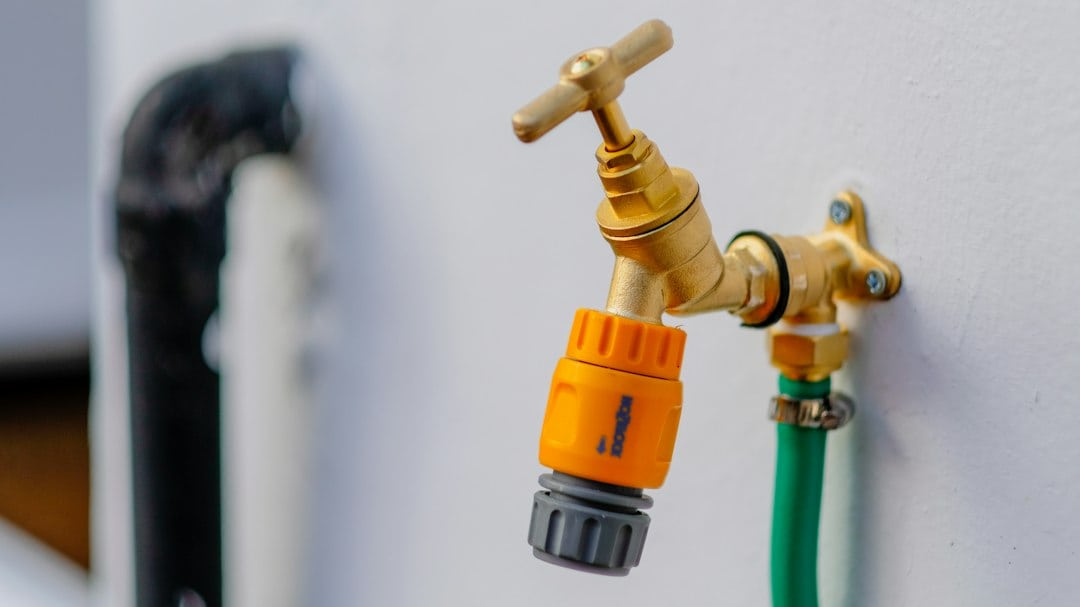
Illustrative photo: Harry Grout / Unsplash; not a documented RV installation or firsthand trip.
Use your RV manufacturer’s instructions for disinfecting and flushing the fresh-water system. The approved product, amount, safety precautions, and required treatment time can vary by RV and equipment. Do not use smell or taste alone to judge whether drinking water is safe.
Use this as a planning sequence alongside your exact manual. It is not a universal bleach recipe. Record the approved product, concentration, dose, contact time and valve settings before starting; if any are missing, ask the RV manufacturer or service technician.
- Prepare: Confirm tank capacity, obtain potable water and a dedicated drinking-water hose, and identify an approved place to dispose of the treatment water.
- Protect equipment: Shut down and cool the water heater as its instructions require. Identify filter removal or bypass requirements and the correct tank, drain and water-heater valve positions. Never open a hot or pressurized heater.
- Drain and treat: Follow the manual’s drain sequence, close the specified drains, and add the approved sanitizer using its stated dilution and filling method. Never mix cleaning chemicals or pour an improvised mixture into the system.
- Reach the water lines: Use the specified pump and faucet sequence so treatment reaches every outlet included in the procedure, including an outside shower if fitted. Keep the system out of drinking-water service during treatment.
- Observe contact time: Start the timer at the point directed by the manual. Do not shorten the treatment or assume extra concentration is better.
- Drain, flush and restore: Dispose of the solution appropriately, flush with potable water as directed, restore filters and valve settings, and check for leaks. Follow the heater’s filling and restart instructions; do not energize an empty storage heater.
- Record and reassess: Log the date and method. If contamination is suspected or unusual water persists, keep it out of drinking and food preparation use until the source and system have been assessed.
Why a bleach dose from another RV may not fit yours
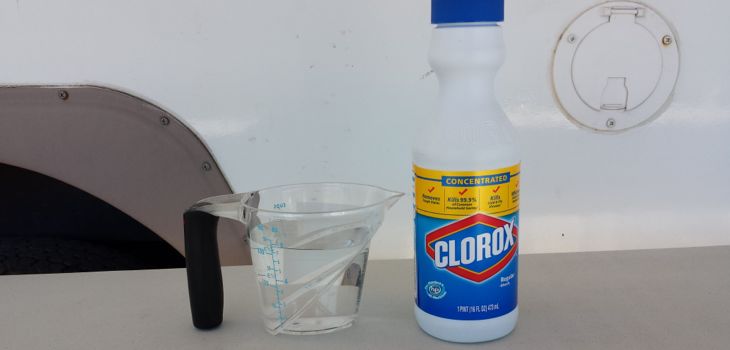
For example, the 2022 Jayco Swift manual, printed pages 71–73, specifies heater bypass and cartridge removal, then describes a quarter cup of household bleach per 15 US gallons of tank capacity and a four-hour treatment for its stated 50-ppm method. That is a model-specific example, not a recommendation for every RV or every bleach strength. Confirm the product concentration and complete procedure with your own manufacturer; tankless heaters, filters and fill arrangements can require different handling.
Keeping RV Drinking Water Safe Between Cleanings
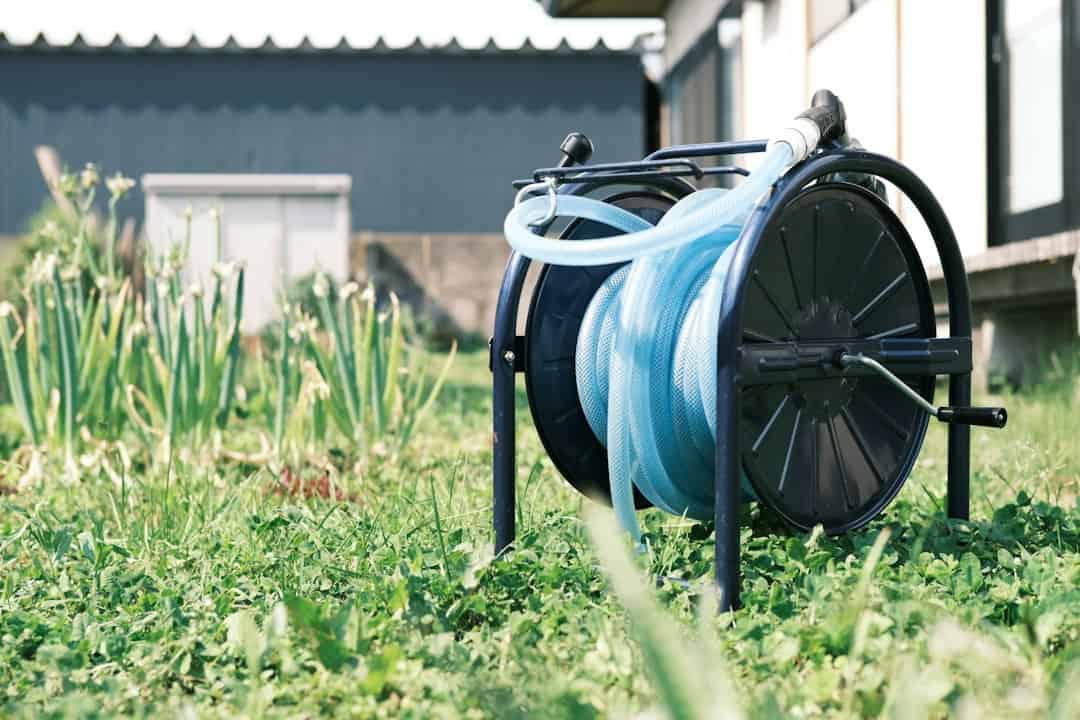
Illustrative photo: Seiya Maeda / Unsplash; not a documented RV installation or firsthand trip.
Check the water source: Before connecting to a campground or RV park water supply, confirm with the operator that the water is safe to drink. When filling a tank away from a campground, use a known drinking-water source; untreated private-well water may need testing. These precautions are included in the CDC’s Safe RV Water guidance.
Know what your filter does: Water filters are not all equivalent. A filter that improves taste may not remove germs. Review the filter label, follow its replacement schedule, and maintain the fresh-water system according to the RV and equipment manufacturers’ instructions.
Don’t treat stored water as sterile: Some uses, including certain medical devices and contact-lens care, require water or solutions that meet specific safety standards. Follow the relevant medical-device instructions rather than assuming water from an RV tap is suitable.
RV Fresh Water Tank Questions
How often should I have an RV water tank sanitized?
Check your RV manufacturer’s maintenance schedule and follow applicable drinking-water advisories. A tank may need attention after storage, maintenance, a suspected contamination event, or a notice affecting the water source. The CDC’s RV water guidance explains why source water and system maintenance both matter.
Does an RV drinking-water filter make the tank safe?
Not necessarily. Filters have different purposes and certifications; a filter designed for taste and odor does not automatically remove harmful microorganisms. Verify the manufacturer’s claims and maintain the system as directed rather than treating a filter as a substitute for safe source water or tank care.
What if my RV tap water looks or smells unusual?
Do not assume the water is drinkable. Avoid using water of uncertain quality for drinking or food preparation, review local advisories, and have the system or water source assessed as appropriate. Clear water can also be unsafe, so appearance alone is not a reliable test.
Further RV reading
For arrival and departure planning, follow our travel-trailer campsite setup checklist. Prepare for the next RV outing with our guides to leveling a travel trailer, RV sewer-valve maintenance, and campsite etiquette. For seasonal storage, see the RV winter storage checklist and follow your RV manufacturer’s winterization instructions.