Indoor vs Outdoor RV Storage: How to Choose in Canada
Indoor RV storage provides more shelter from rain, snow and sunlight than an open outdoor lot, but it usually costs more and may have tighter access and clearance limits. Covered outdoor storage is a middle ground. For a Canadian trailer or motorhome, the best choice depends on your climate, the actual building, storage term, vehicle dimensions and what the facility contract includes.
This guide is about choosing a storage location, not about performing winterization. Even a trailer kept indoors may need manufacturer-specified plumbing and battery care, especially in an unheated building. For seasonal preparation, use our RV winter storage checklist.
Indoor, covered or outdoor RV storage: comparison
| Storage option | Weather exposure | Access and budget trade-off | Ask the operator |
|---|---|---|---|
| Indoor, climate-controlled | Typically shields the RV from outdoor precipitation, direct sun and much temperature variation | Usually the most expensive and less widely available | What temperature and humidity ranges are maintained? Are services included? |
| Indoor, unheated | Shields from precipitation and sun but does not guarantee above-freezing temperatures | Often costs more than outdoor storage; interior access may be limited | What are the winter temperatures, ventilation and door clearances? |
| Covered outdoor bay | Roof shelter can reduce direct sun and precipitation; wind-driven rain or snow may still reach the RV | Compromise between shelter and typical outdoor pricing | Are sides open, and who manages roof snow loads and drainage? |
| Open outdoor lot | Most exposed to UV, rain, ice, snow, debris and wind | Often the least expensive option and may have easier vehicle access | Is the surface well drained, secure, and accessible after storms? |
| At home | Depends on garage, driveway, carport or yard conditions | Convenient to inspect; local rules and space can limit suitability | Are parking restrictions, insurance requirements and access clear? |
These are general trade-offs, not guarantees about any facility. Go RVing’s winter storage comparison and CAA-Quebec’s winter RV storage guidance describe the difference between indoor shelter and outdoor exposure. Actual policies and conditions can vary considerably.
Indoor RV storage: what does “inside” really buy you?
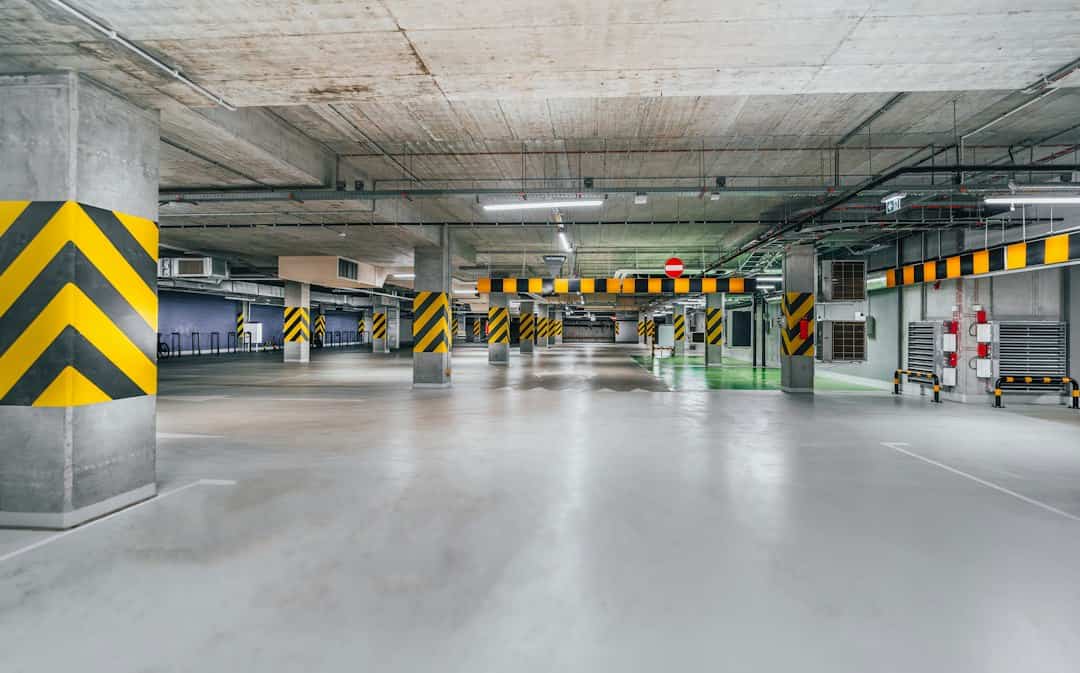
Illustrative photo: Jakub Żerdzicki / Unsplash. Confirm equipment specifications with the relevant manufacturer.
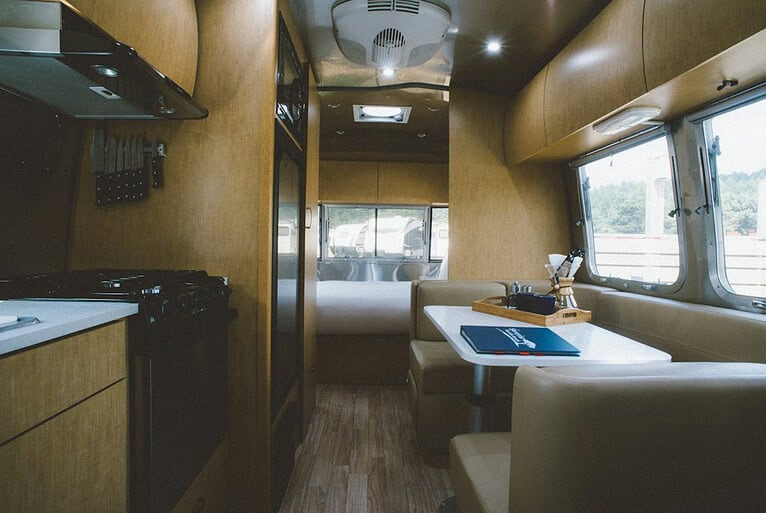
Indoor storage can protect an RV from direct precipitation, falling leaves, long-term sun exposure and some storm damage. Yet enclosed does not automatically mean heated or humidity-controlled. Ask whether the building is heated continuously or only intermittently, and whether it has ventilation, moisture management and monitoring. An unheated metal building can still reach freezing temperatures in much of Canada.
Measure the entire RV, including roof air conditioners, antennas, attached accessories and any hitch or ladder projection, using the manufacturer’s specifications and a current physical measurement. The bay must accommodate height and width through the doorway, not just at the parking stall. Ask about maneuvering room, towing vehicle access, rules on stored gear and who is permitted to move your RV.
Heated and climate-controlled are not synonyms
A facility may heat the interior above a minimum temperature without controlling humidity. Conversely, a building may advertise humidity management without staying warm enough for vulnerable RV plumbing. Request the written operating conditions instead of relying on a brochure label. A heated bay does not eliminate the need to follow the owner manual’s storage guidance or to respond to power failures.
Outdoor RV storage: when is it reasonable?
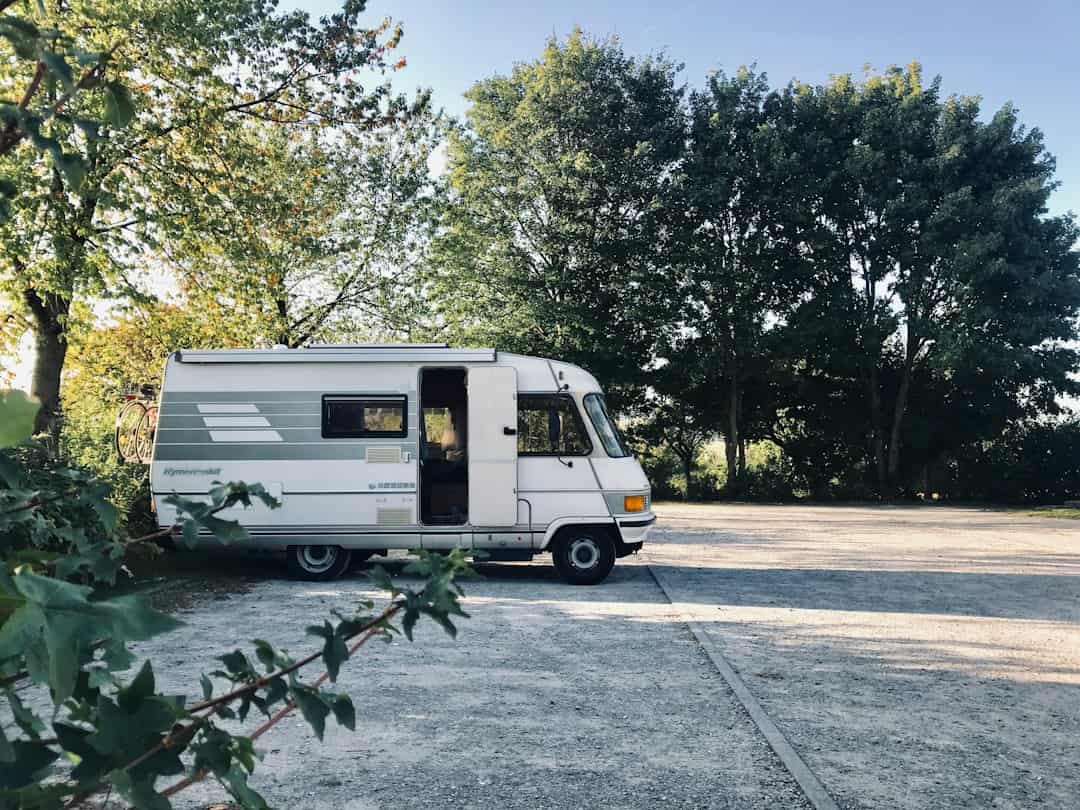
Illustrative photo: Fabian / Unsplash. Confirm equipment specifications with the relevant manufacturer.
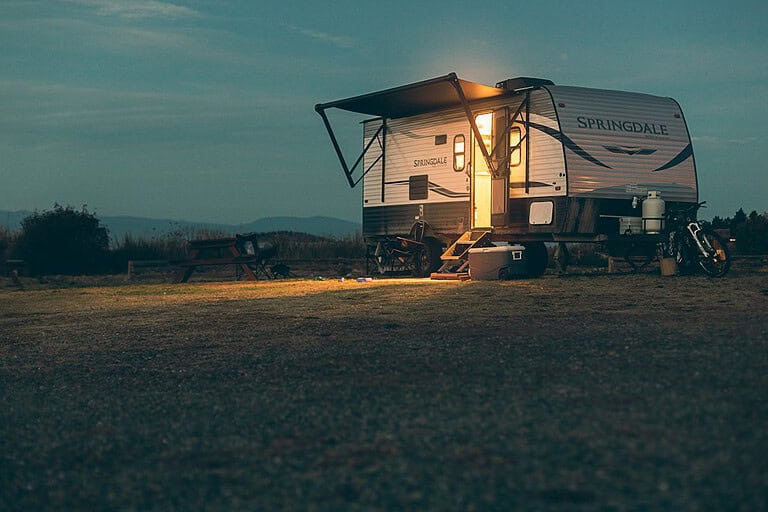
An outdoor lot can be practical when the RV is correctly prepared, the site drains well and you can inspect it regularly. A surface with standing water, overhanging branches or wind-blown debris may add avoidable risk. Ask who handles snow clearing and whether the RV can be reached after a storm.
Go RVing recommends inspecting roof seals, protecting surfaces, assessing tires and periodically checking a stored RV. Use only a cover suitable for your particular RV and local weather; a poorly fitted cover may rub finishes or interfere with ventilation. Our condensation guide explains what to look for when moisture develops inside an RV. Do not climb a slippery RV roof to remove snow—contact a qualified service provider if a snow-load concern needs attention.
Is covered outdoor storage worth the difference?
Sometimes. A properly designed overhead canopy may reduce rain or snow hitting the roof directly, while keeping the fee below that of an enclosed bay. But it may not protect sidewalls from wind-driven weather or offer the same theft deterrence as an indoor unit. Compare the actual stall exposure, not just a label saying “covered.”
Questions to ask about security and access
- Is the property fenced, staffed or monitored, and who has gate or building access?
- What are the exact hours for collecting, visiting or moving an RV? Can those hours change in winter?
- Who has the keys? Does the operator move units, and what happens if one is damaged?
- What are the fire, electrical, battery-charging and personal-property rules?
- Will your RV fit the gate, lane, turning radius, indoor door and designated space?
- Can you inspect the RV periodically, and does anyone contact you after a security or weather incident?
Get material promises in writing. A camera or keypad alone does not establish that a facility will pay for theft or damage. A low-cost lot you cannot access for months might be less useful than a nearby space with a clear inspection policy.
How much does RV storage cost in Canada?
There is no single defensible Canada-wide monthly price. Rates vary with metropolitan area, trailer length and height, indoor versus outdoor protection, heating, term, insurance requirements and services. Ask two or three suitable operators for a written quote for the same RV dimensions and dates. Compare:
| Cost item | Check before signing |
|---|---|
| Base space fee | Monthly or seasonal rate, minimum contract term and how rate changes work |
| One-time costs | Deposit, administration, access-card or setup fees |
| Optional services | Electricity, periodic inspections, winterization, tire or wash services if offered |
| Retrieval and cancellation | Notice periods, appointment fees, early-exit charges and access restrictions |
Do not choose purely on an advertised starting rate. For example, a cheaper space farther from home may add travel time and fuel costs each time you check on or collect the trailer.
Confirm insurance coverage at the precise storage location
Before transferring an RV into storage or changing its registration/coverage, ask your own insurer or licensed broker what the current policy covers at that facility. Confirm theft, weather damage, fire, vandalism, deductibles, personal contents, and whether the insurer needs to know the storage address and storage arrangement. Facility liability insurance and your own RV policy are separate questions.
Do not assume you can cancel insurance because the RV will not be driven. Coverage and registration requirements vary by province and by RV type. The BCAA recreational-vehicle policy wording is an example of why optional coverage and exclusions must be read in the actual policy; it does not describe every insurer’s terms.
Does indoor storage mean you can skip winterizing?
No universal answer. An indoor, unheated bay can fall below freezing. Even heated storage may experience outages, and appliances may have special requirements during long inactivity. Follow the RV and individual equipment manuals or ask a qualified technician about protecting plumbing, batteries, tires, seals and safety systems. Our battery winter storage comparison discusses how lead-acid, AGM and lithium systems differ, and our Canada RV storage checklist covers the seasonal preparation decisions.
Pre-contract RV storage checklist
- Record actual RV length, width and maximum height, including permanent accessories and hitch/bumper projections.
- Ask for a photo, written description and measurements of the exact stall or bay assigned.
- Confirm indoor heating, humidity control, roof shelter and drainage rather than trusting category names.
- Check access hours, snow clearing, vehicle movement rules, security and inspection permissions.
- Compare full contract costs, cancellation rules and renewal terms.
- Verify storage-address and coverage conditions with your own insurer or broker.
- Document the RV’s condition with date-stamped photos before drop-off and again at pickup.
- Arrange approved winterization and maintenance; do not rely on the storage facility to do it unless contracted.
Frequently asked questions
Is unheated indoor RV storage better than outdoor storage?
It usually provides more shelter from direct precipitation and UV exposure, but it can still freeze and have moisture issues. Judge the actual facility conditions, access and total costs against an outdoor alternative.
Can I leave my travel trailer in a driveway all winter?
Often, where the space is suitable and local parking bylaws, strata or property rules permit it. Check drainage, trees, security and how the RV will be inspected, and confirm insurance.
Will a storage facility’s insurance cover my RV?
Do not assume so. Ask what the facility is responsible for and confirm your own RV and contents coverage directly with your insurer or broker.
Should I pay more for a heated unit?
A heated unit can help manage winter cold risk, but ask for actual minimum temperatures, humidity management, access and power-outage procedures. Whether it is worthwhile depends on the RV, climate and price.
Sources checked October 26, 2026
- Go RVing — Complete guide to storing an RV for winter
- Go RVing — Preparing your RV for winter storage
- CAA-Quebec — Winter RV storage and weather protection
- BCAA — Example RV insurance policy wording (confirm your own)
Research-based comparison. No storage facility was personally inspected, no storage price was quoted as current market fact, and no insurance promise is made. Read the facility contract and ask an insurer or qualified RV service professional about the particular RV.