Winter RV Camping in British Columbia: Open Parks, Services and Road Checks
Yes, winter RV camping is possible in British Columbia, but “park open” does not always mean the campground, access road, potable water or electrical hookup is available. Check the exact campground’s winter-season section and current advisories before leaving. For a first winter trip, prioritize a manageable route, accessible sites and an RV approved for the expected conditions.
BC’s coastal and Interior winters are very different. A rainy trip near Victoria can create moisture problems, while routes crossing higher elevations may face significant snow and travel restrictions. This guide offers verified examples from BC Parks, not an assurance that a campsite will be accessible or available on your travel dates.
Which BC Parks campgrounds offer winter camping?
The following three examples are described on their official BC Parks pages as offering some form of winter frontcountry camping. This is not a complete list, and it is not a live vacancy report. The services and individual sites available may differ from the main-season listing.
| Park | What BC Parks says about winter | What to verify before travelling |
|---|---|---|
| Rathtrevor Beach Park, Vancouver Island | Year-round frontcountry camping with limited off-season facilities; winter camping is first come, first served | Which winter sites are accessible, current gates and advisories, water and washroom availability |
| Goldstream Park, near Victoria | Open year-round; winter facilities are limited and a winter frontcountry camping fee applies | Winter-season campground access, individual site size, any utility availability, payment details |
| Gordon Bay Park, Cowichan Lake area | Frontcountry campground open year-round with limited off-season services | Road and campground conditions, winter facilities, registration arrangements and RV size limits |
Verified October 26, 2026 from the official individual park pages. Never treat an older blog or a summer campground listing as proof of winter vehicle access. Official park notices and weather conditions can change at short notice.
A park can be open while its vehicle access is restricted
Bamberton Park’s official page illustrates why the details matter: it lists winter camping information, but it also carries an advisory saying vehicle access to the park is unavailable in the winter season. That makes it unsuitable to describe simply as an accessible winter RV campground without reconciling the current notice with park staff. Check advisories first, and seek clarification directly where official information appears inconsistent.
Understand what “limited facilities” means
Off-season camping can mean reduced or shut-off water, limited toilets, no staffed gatehouse and some campground loops closed. A winter rate is not evidence of electrical hookups. Many provincial-park frontcountry sites do not offer full RV services. Before choosing a site, confirm all of the following with the individual park:
- Is the vehicle-accessible campground actually operating on your dates, and is the access road maintained?
- Is the winter camping area suitable for your trailer or motorhome’s total length and required turning clearance?
- Is there potable water, a dump station, electrical service or any hookups—and are those services operating in winter?
- Are sites reservable, first come/first served or closed, and how are fees collected?
- Are there gate hours, seasonal closure notices, fire restrictions or restrictions on generator operation?
BC Parks notes that winter camping fees are often lower because services are reduced, including water systems being shut off to prevent freezing. Check its frontcountry reservation rules and the park-specific winter section, rather than assuming the normal reservation calendar applies.
BC winter road conditions matter as much as campground amenities
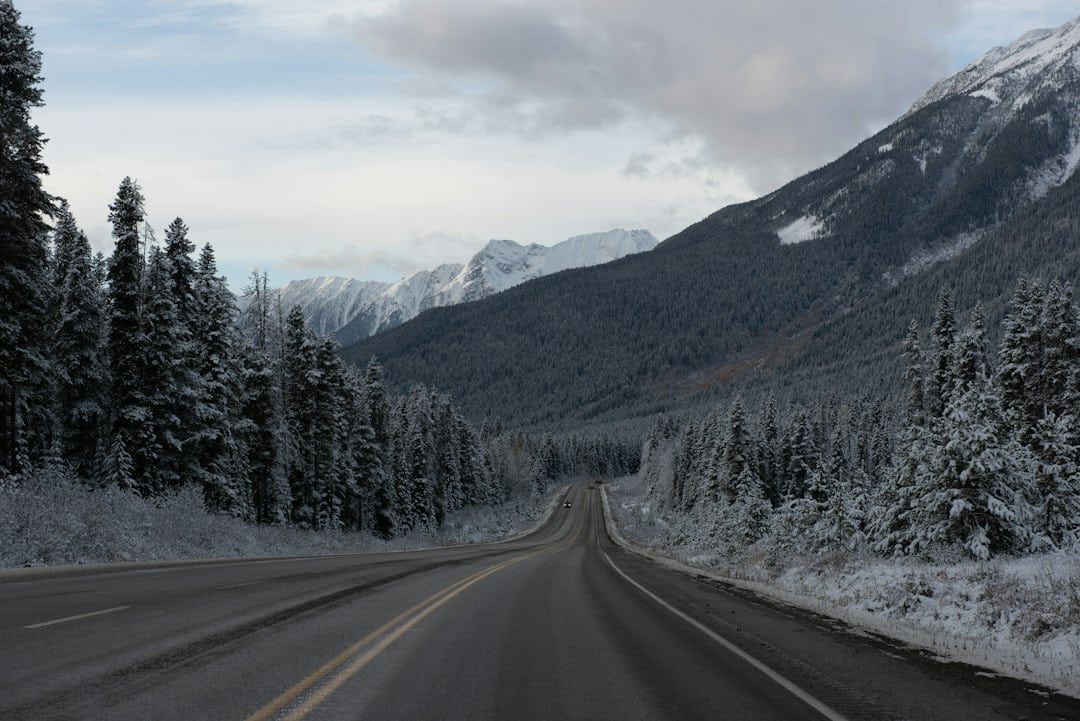
Illustrative photo: Suzanne Rushton / Unsplash; not a model-specific inspection or electrical installation.
Rain at the coast does not describe the condition of mountain passes. BC’s transportation ministry explains that designated highways require winter tires or chains during signed seasonal periods, often from October 1 to April 30, and that some lower-elevation routes end this requirement on March 31. Exact obligations depend on road signs, vehicle type and applicable rules. Read the province’s designated winter tire and chain routes and winter driving advice.
Before setting off and again on travel day, consult the official DriveBC conditions and cameras, the latest forecast, and your destination park’s advisories. Review restrictions applying to both the tow vehicle and trailer rather than assuming one vehicle’s tires settle the requirements. If conditions exceed your equipment, experience or the route’s restrictions, postpone the trip.
Check your RV’s winter suitability before booking
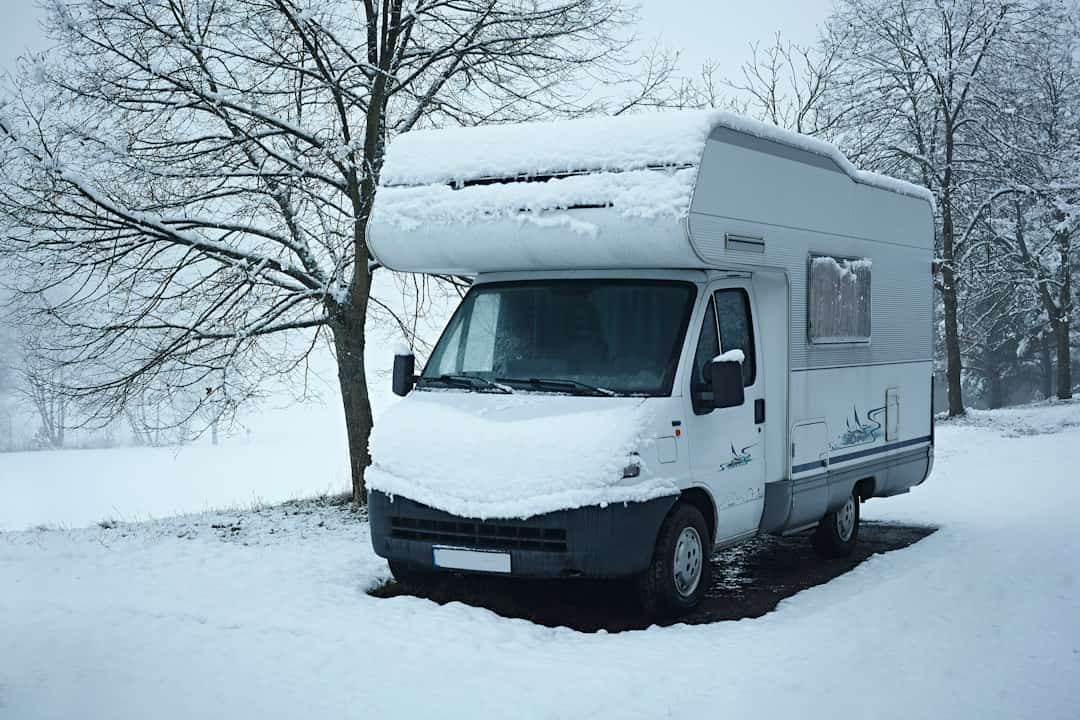
Illustrative photo: Wolfgang Rottmann / Unsplash; not a model-specific inspection or electrical installation.
Not all motorhomes and travel trailers have protected water lines, heated tank compartments or heating systems designed for freezing weather. “Four-season” is a marketing description, not a universal engineering certification. Ask the manufacturer or qualified RV technician which temperatures and operating arrangements the particular RV supports. A unit winterized for storage may not have a usable water system until correctly returned to service.
Discuss furnace condition, power availability, batteries, water-system limitations and any documented winter setup with the qualified service provider. Our winter storage checklist is for a different situation: putting an RV away rather than using it in freezing weather. The RV battery winter storage guide explains why battery chemistry and temperature matter.
Heating, ventilation and carbon monoxide safety
Use only the RV’s approved and properly maintained heating equipment. Keep ventilation and furnace exhaust openings unobstructed, check the appropriate safety alarms, and never operate outdoor cooking equipment, barbecue grills or fuel-powered generators inside a camper or other enclosed space. Health Canada’s carbon-monoxide prevention guidance specifically addresses campers and other enclosed spaces. Have any heating, propane or electrical faults evaluated by a qualified technician rather than improvising a fix during a cold trip.
Cold weather can also produce condensation inside RVs. Manage humidity and inspect for dampness, especially around windows and bedding. Our RV condensation prevention guide covers everyday inspection and ventilation considerations.
Choosing between coastal and Interior winter camping
Coastal British Columbia
Vancouver Island and coastal areas may offer more mild-weather opportunities, but heavy rain, wind and occasional freezes can still affect roads, access and RV interiors. Check for localized weather warnings and campground restrictions, not just overnight lows.
Interior, mountain and northern routes
Expect greater variability with elevation, colder temperatures and potentially serious travel disruption. BC Parks’ winter safety guidance emphasizes weather checks, current route conditions, trip planning and being willing to change plans. Choose a trip appropriate to your vehicle and experience; an isolated unmaintained road is not equivalent to an accessible frontcountry campsite.
Pre-trip winter RV campsite checklist
| Check | What to confirm |
|---|---|
| Park status | Current official winter camping notice, individual site availability and posted advisories |
| Road travel | DriveBC conditions, winter tire/chain requirements and forecast for the complete route |
| Utilities | Potable water, electricity, washrooms, dump facilities and whether they operate during your stay |
| RV suitability | Manufacturer’s cold-weather limitations, professional service checks and working safety alarms |
| Reservation | Booked or first-come policy, camping fee and how to register |
| Backup plan | A safe alternative destination or return plan if access or weather changes |
See our BC campground selection guide and reservation checklist for broader campsite selection criteria.
Frequently asked questions
Are BC provincial park campgrounds open all winter?
Some are, but not all, and many have limited services or specific winter loops. Always read the exact park’s winter section and any current advisories.
Can I reserve a BC Parks campsite for winter?
It depends on the campground and date. For example, Rathtrevor Beach Park says its winter frontcountry sites are first come, first served. The regular summer reservation rules do not establish winter availability.
Do winter campgrounds in BC have 30- or 50-amp hookups?
Do not assume so. Confirm electrical service for the specific site and season; many provincial-park winter camping opportunities are not full hookup RV resorts.
Is a park listed as open enough to know I can take a travel trailer?
No. Vehicle access, winter gates, site length, road conditions and seasonal restrictions must be checked independently.
Official sources checked October 26, 2026
- BC Parks — Rathtrevor Beach Park
- BC Parks — Goldstream Park
- BC Parks — Gordon Bay Park
- BC Parks — Bamberton Park (advisory example)
- BC Parks — Frontcountry camping reservations and policies
- Province of BC — Winter tire and chain route rules
- BC Parks — Winter safety and trip planning
- Health Canada — Carbon monoxide prevention
This article uses official parks and safety information checked October 26, 2026. It does not represent firsthand campground visits, weather monitoring or RV cold-weather testing. Recheck official sources immediately before travel because winter closures, access, services and policies can change.