
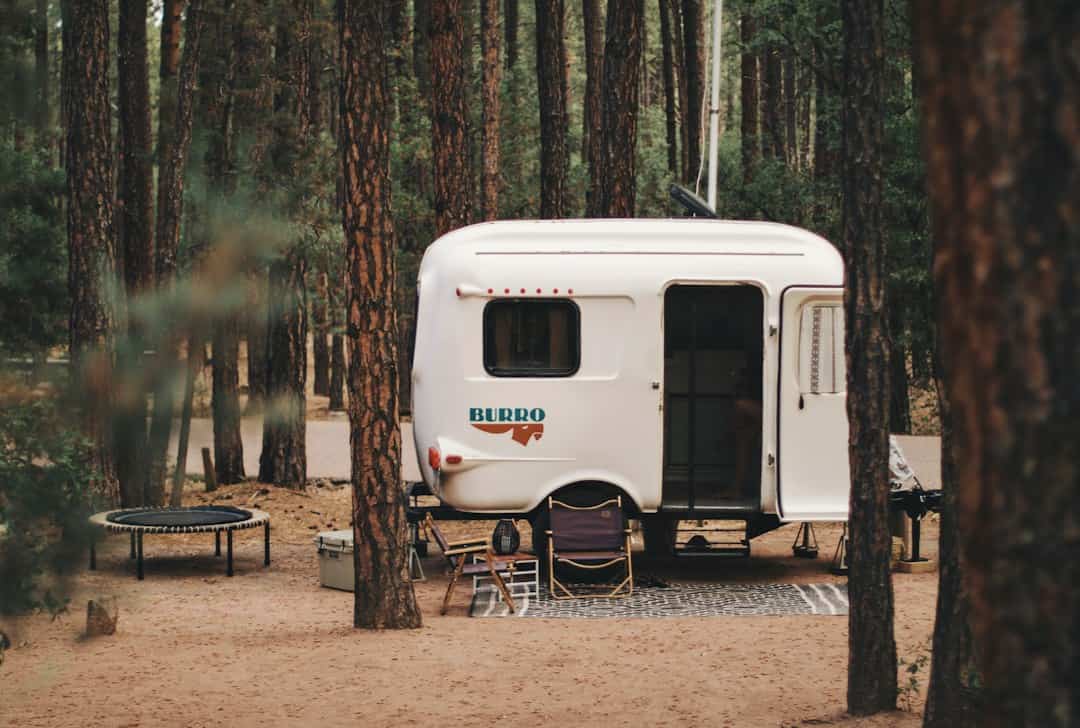
A beautiful campground photograph does not tell you whether your travel trailer will fit beside the picnic table. Choosing an RV campsite is a matching exercise: your rig, your routine and the campground’s physical space must work together. A site can be listed as RV-friendly and still have awkward access, limited door clearance or services in the wrong place for your layout. Use this checklist before you book rather than trying to solve every surprise at check-in.
Quick answer: Confirm the permitted rig length and access, the real hookup type, a suitable arrival route, space for doors and slides, and any restrictions affecting your stay.
At a glance
| Category | What to consider | Why it matters |
|---|---|---|
| Rig compatibility | Trailer and tow vehicle dimensions | A listed site length is not always all usable |
| Convenience | Water, power, toilets and nearby activities | Choose what matches your plan |
| Comfort | Sun, shade, noise, slope and privacy | Trade-offs vary by season |
Measure the combination that will arrive
Record the trailer’s length, overall height and the room your tow vehicle requires. Booking systems sometimes describe pad length without making it clear where an extra vehicle may park. Check maximum trailer and vehicle rules as well as any approach or turning limitations. A heavily treed campground may be delightful but require more overhead clearance awareness than an open RV park. If the site information is vague, ask campground staff for a description instead of assuming that “large RV” covers your setup.
Know exactly which hookups are available
“Full hookup” commonly means electricity, water and sewer, while “partial hookup” may supply only some of those services. A dry site may have no hookup at the actual pitch, though campground facilities might still be nearby. Always read the site’s amenity listing, as terminology and available electrical services vary. Our hookup comparison guide gives a side-by-side overview, and the fresh-water article covers source-water awareness.
Consider doors, windows, slides and everyday movement
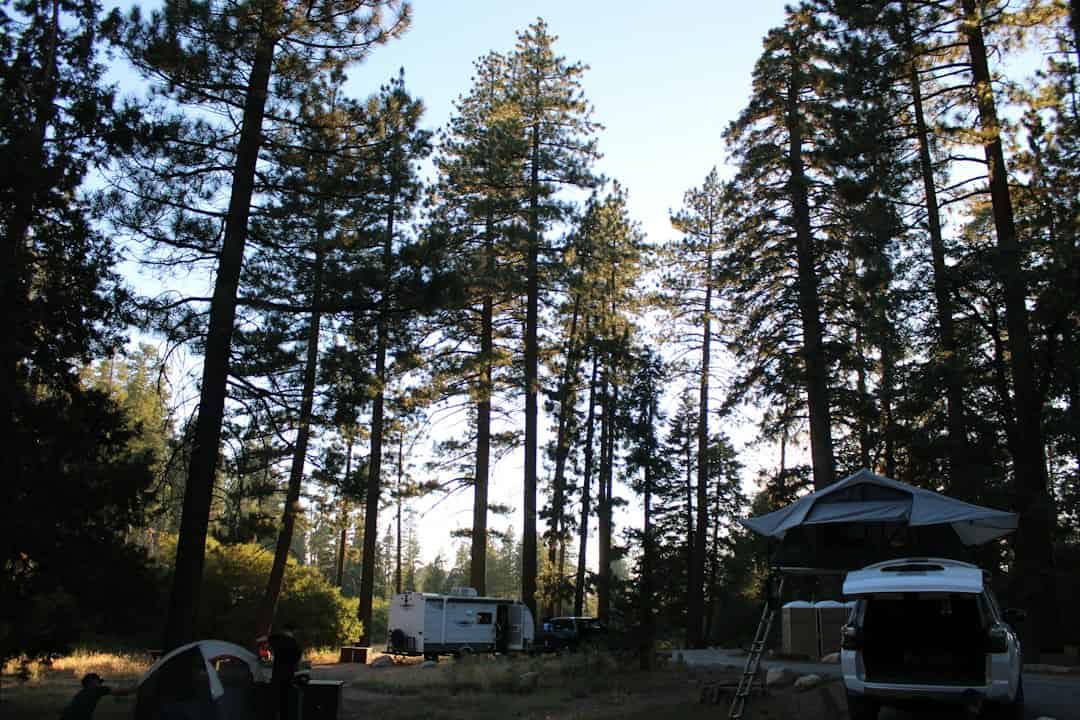
Imagine opening the door, stepping onto the ground, walking around the trailer and reaching a picnic table. Does the site offer room for your trailer model’s slides or an awning only where permitted? Is the outdoor sitting space beside a roadway or close to neighbors? Avoid focusing only on whether the wheels fit. A level, unobstructed area and a clear pedestrian route can make a much bigger difference to a weekend than a dramatic view from one window.
Balance shade, sun and seasonal conditions
Trees help create atmosphere, but branch clearance and falling debris require attention. Sun exposure can affect how warm the campsite feels, while heavy shade may keep wet ground from drying quickly. In shoulder season, look at local precipitation and drainage; in summer, consider afternoon heat and outdoor sitting areas. Avoid assuming that a grassy pitch will remain firm after rain. Campground descriptions and recent photographs are clues, not guarantees about the exact conditions on your arrival date.
Read campground rules before deciding
A site might suit your trailer physically but not suit your plans. Check quiet hours, pet restrictions, generator policies, visitor parking, maximum occupancy and fire regulations. When traveling with children or pets, ask how close the pitch is to the campground road and activity area. An otherwise excellent site can become frustrating if you discover after paying that your desired activity or equipment is not allowed. For considerate behavior, see our campground etiquette guide.
Practical checklist
- Confirm both trailer and tow-vehicle parking space.
- Ask whether the pad is paved, gravel or another surface.
- Read the exact hookups, not only the “serviced” label.
- Look for turning access and tree clearance.
- Check nearby facilities and quiet-hours rules.
Frequently asked questions
Is a pull-through site always better?
Not necessarily. Pull-through designs can simplify access, but a back-in pitch may offer the location or privacy you want. Compare site dimensions and access rather than treating one label as automatically superior.
Should I choose a shady RV site?
Shade can improve comfort, but look for branches, damp ground and limited clearance. The better choice depends on season, weather, your trailer and how you plan to use the site.
The takeaway
A carefully chosen pitch removes a surprising amount of stress from arrival day. Match the campground listing to your actual vehicle and camping habits, then keep a few preferred sites in your notes for future visits.
For a site that works for everyone, compare accessible campsite details, account for wind exposure and current forecasts, and review quiet-hours and exterior-lighting expectations.
Related Wandering RV Life guides
Continue reading: Booking campground reservations, Full versus partial hookups, Campsite setup checklist. These topics work together, but your own trailer manual and campsite rules always take precedence.
Helpful references
Editorial images are illustrative; featured photograph: RV Editorial 02 – How to Choose an RV Campsite – David Whipple / Unsplash. No products were independently tested for this article. Updated October 25, 2026.